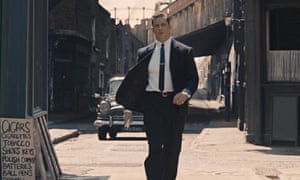
"The increase in hardware and content in media industries has been significant in recent years. Discuss the effect this has had on institutions and audiences in the media area you have studied." June 2014
How can we use our case studies to respond to this question?
What relevance, if any, do the following have? Jurassic World case study, the presentation on new distribution methods and our knowledge of '71 to answer the following exam questions?
Today you should plan an exam essay answer on issues relating to how national and local (specifically British) audiences are targeted by international or global institutions. Remember the bullet points? Here they are below.
We are looking at the last one, just above 'refer to candidates' own media consumption' (which means = your film-watching choices, the platforms that you use to watch films, and what your family and people of your age do').
How to plan? Write a list of topic sentences then the paragraph writes itself.See underneath!
Your list oftopic sentenceson targeting national and local audiences might go like this:
The 'big 6' Hollywood studioschase mass mainstream audiences often with formulaic films that Dalecki called 'the 4S megafranchise model'. Hollywood is renowned
for producing blockbusters with strong narratives, often part of a
sequel, usually with larger than life characters, using exciting,
complex sets often in exotic or extravagant locations
Distributors target audiences via an interconnected web of companies which all promote the
film as a package of products. (Give as many details as possible from our Case studies Avengers )
Distributors of big-budget movies like Jurassic World target audiences through multi-pronged campaigns (the Waterloo launch, website, OOH media, social media).
Issues include the commodification of films via product placements (give details from our Case study Skyfall). Film critic Kevin Maher attacks global giants like Amazon, Google and Hollywood for such 'obscene corporate products that violate the cultural life of this country' (see his 'boycott the blockbuster' article in my screenshot below).
Issues
include 'cultural imperialism' or the imposition of one world view and
set of values on the rest of the world; this is why we need a national
cinema that serves the cultural life of this country.
Certain British films target both national and international audiences. '71 was marketed to national and international audiences by Warp (open link): despite being a film about the Troubles in Ireland, it was marketed as a film aboutthe radicalization of ALL young people, especially relevant to UK and US audiences who live in fear of terrorist attacks.
Working Title released Legend in the knowledge that US audiences would relate to the 'rat pack' theme and UK audiences would buy into the gangland glamour: "Brian Helgeland’s film
certainly benefits from the UK audience’s existing awareness of, and
interest in, the film’s subject – the Kray brothers remain the most
notorious London gangsters. However, Hardy is also a key selling point:
given his reputation as a highly committed actor, his performance in the
dual roles of Ronnie and Reggie Kray exerted a powerful curiosity
factor."
The Hobbit evokes national nostalgia for old-world values and rural idylls(say how it is quintessentially British) but also addresses international audiences (through spectacle, story, sequel).
Some films
appear to compromise artistic integrity in favour of commercial success
with one eye on the international market, selling a predicable or
sanitised vision of Britain. The Boat That Rocked (Richard
Curtis) clearly targeted middle England baby boomers & seems even
more seedy in the light of current DJ scandals. Critics attacked Curtis
for failing to use his influential position to direct 'more challenging'
films like Slumdog Millionaire (Danny Boyle) that introduce audiences to more important, real issues.
When David
Cameron visited Pinewood, the home of the successful James Bond
franchise, he called for British film makers to make 'more commercially
successful pictures' and warned that government money would be
rebalanced to support 'more mainstream films', there was an outcry that several
huge recent British hits might not have seemed commercial &
therefore might not have received lottery funding. Neither an exploited
Indian teenager nor a royal with a stutter sound
like box office gold - but both Slumdog Millionaire and The King's
Speech won top Oscar honors.
Working Title
productions capitalize successfully on a particular vision of Britain
that is readily marketable internationally, such as literary adaptations
(Tinker Tailor), period drama, history (Mary Queen Of Scots 2014) , romcom, humour (Jonny English). Bridget Jones's Baby (2014) illustrates how WT uses Hollywood model of sequels, unsurprising as its parent company is Universal
WT also produces films for a more local market; currently The World's End is in production, targeted at audiences of Hot Fuzz and Shaun of the Dead.
Smaller production companies with micro budgets target more local audiences (Tortoise In Love £160,000
received BFI funding to screen for local audiences but secured red
carpet premiere in Leicester Square; even smaller budget for Shifty of
£100,000 led producer Eran Creevy to target niche London audiences very
specifically through risky personal emails; distributors of The Disappearance of Alice Creed for new
director J. Blakeson detected audience hotspots around Southampton Uni
via interactive website material and premiered in Southampton to reward
local audiences.
We look at representations of ethnicity in East Is East (directed by Damien McDonnell, written by Ayub Khan Din) and of disability in Extras (BBC TV Drama, Ricky Gervais). We practise the three-point exam technique as recorded on the class whiteboard.
We have spent a good deal of time preparing for the examination essay on the film industry in class. Here is advance notice of recent exam titles: select ONE to do as a timed essay for Thursday's lesson. You have been given the following guidance about exam technique. We have covered it many times in class orally and it is on my class blog HERE. You have been emailed copies of marked exam scriptswritten by good Claremont students as well as OCR exemplar scripts (check your emails 18.04.16).
The mark scheme has been on the left side of the classroom whiteboard all year: 50 marks
2EAA (explanation, analysis, argument ) out of /20
2EG (examples) out of /20
2TM (terminology) out of /10 HOW TO STRUCTURE YOUR EXAM ANSWER:
State your area of study ('I have studied the film industry.')
Define the key words in the title ( 'By media ownership, I understand...')
Set out the case studies that you intend to use ('I intend to illustrate my points through the following case studies: Disney megafranchize (Jurassic Park, Avengers), British Film medium /low budget (Legend, '71), micro-budget indie (Tortoise In Love)'
Use the 4 stages of film making (conception, production, distribution/marketing, exhibition) to step through your points
Prepare sentences on your own viewing habits & your peers' and family's
To reach level 4 marks, refer to trends
ALL OF THE ABOVE IS ON MY CLASS BLOG: LOOK AT THE LINK HERE There are many pages of guidance on G322 Institutions and Audiences question 2 on the blog, all of which we have studied in class.
TEST ESSAY THURSDAY 28 APRIL 2016
Answer ONE question below in relation to the film
industry, making detailed reference to examples from your case study
material to support the points made in your answer.
June 2015
To what extent does media ownership have an
impact on the successful distribution of media products in the media are that
you have studied?
January2014
The increase in hardware and content (=
proliferation) in media industries has been significant in recent years.
Discuss the effect this has had on institutions in the media area you
have studied.
June 2013
Evaluate the role of digital technologies in the marketing
and consumption of products in the media area you have studied.
January 2013
What impact does media ownership have upon the
range of products available to audiences in the media area you have studied?
June 2012
"Cross-media convergence and synergy are
vital processes in the successful marketing of media products to audiences.” To
what extent do you agree with this statement in relation to your chosen media
area?
In what ways does your media product use, develop or challengeforms and conventions of real media products?
PRESENT THIS THROUGH YOUTUBE ANNOTATIONS
Start with a Word document so that you can put down the analysis, look at it critically, cut the words down so that the text box won't be too large on YouTube
YOU ANALYSE YOUR FILM OPENING AS IT RUNS
HALF
OF THE MARKS FOR YOUR THRILLER ARE FOR TITLES, so make sure that you
explain in what way what you have used titles and BRING IN WHAT YOU
LEARNT FROM THE ART OF THE TITLE WEBSITE
Step by stepthrough your own work
Discuss the way your thriller incorporates generic conventions. Specify other thriller scenes / magazine pages
How does your product develop or challenge (break new ground; do something different) conventions?
Do any of the codes & conventions in your product indicate its sub-genre or hybrid identity?
Does your use of conventions point to other thrillers that have influenced your work? Be specific.
In what ways does your media product use, develop or challenge forms and conventions of real media products?
Add a screenshot to explain how to view annotations to your moderator
It is time to finish the Word documents in which you write about the codes and conventions of your production.
Tom Hardy is bang-on as both Ronnie and Reggie in a cartoonish but entertaining account of the Kray twins’ East End reign. Any
retelling of the over-mythologised Kray twins’ tale walks a thin line
between the glamorised cliches of Ronnie and Reggie nostalgia and the
pin-sharp parody of Monty Python’s Piranha brothers’ Doug and Dinsdale
sketch. A “combination of violence and sarcasm” fuelled the Piranhas’
reign of terror, and the same could be said of these latest screen
Krays, with writer-director Brian Helgeland deploying much deadpan
humour amid the beatings, stabbings and shootings of East End folklore. Hinging on the double-barrelled blast of Tom Hardy’s bang-on central performance(s), Legend
is a brash, cartoonish affair, happy to bask in the reflected glory of
its subjects’ bizarre cultural icon status. With an eye on the
international market, Helgeland (who co-wrote the screenplay for LA Confidential) tips his hat to Scarface, White Heatand Sunset Boulevard, investing his British anti-heroes with a stateside pizzazz entirely befitting their Rat Pack aspirations. This may be a British-French co-production, derived from John Pearson’s insider text The Profession of Violence: The Rise and Fall of the Kray Twins, but Helgeland’s worldview is more Goodfellas than The Long Good Friday,
a portrait of glittering London as artificial as the Krays’ star-struck
vision of themselves as the last of the famous international playboys.
‘The film’s real sucker punch’: Tom Hardy as Reggie Kray in Legend.
We begin with the Krays already ruling their East End roost,
eschewing the traditional traipse through childhood, leaping straight
into their turf war with the Richardson gang, which would come to a head in the Blind Beggar pub in 1966. Frances Shea (Emily Browning)
proves our unlikely narrator, recounting the twins’ glory years through
her relationship with Reggie, of whom she declares “it took a lot of
love to hate him”. As a character, Shea is fragile and understated, but
her voiceover puts the ripe in tripe; it’s a credit to Browning that she
gets through its hackneyed “gangster prince” cliches without laughing.
Meanwhile the screen is a heady swirl of shiny streets and spangly
nightclubs, with Duffy belting out Timi Yuro’s Make the World Go Away
to celeb-packed crowds as flat-footed cops (Christopher Eccleston’s
uptight Leonard “Nipper” Read) and lairy villains (Sam Spruell’s nicely
drawn Jack “the Hat” McVitie) drift in and out of carefully
choreographed frames.
The film’s real sucker punch, however, is Hardy – both of him. Having
originally offered Hardy the role of Reggie, Helgeland was persuaded to
let the actor wrestle with Ron as well (both on and off screen), a dual
role to which he brings the same commitment – physical, intellectual,
emotional – as Jeremy Irons essaying both Mantle brothers in David
Cronenberg’s Dead Ringers.
The result is a striking portrait of a single divided self: Reggie, the
calculatingly cool charmer, whose sharp suits mirror his businessman’s
mind; Ron, the paranoid schizophrenic, whose lust for random violence is
matched only by his passion for handsome young men (“I’m homosexual,
but I’m not a poof”) and his dear old mum’s tea and cake. With his
pursed lip, protruding jaw and bulldog absurdism (he parades a
dinner-jacketed donkey through a nightclub), the heavily bespectacled
Ron occasionally resembles Matt Lucas doing an unkind impression of Mark
Lamarr, with a touch of Steve Coogan’s Alan Partridge and Patrick Marber’s Peter O’Hanraha-hanrahan
thrown in for good measure. In Hardy’s hands, Ron is a tragicomic
character, a madman whom Chazz Palminteri’s Angelo Bruno wants muzzled,
but to whom Reggie remains devoted, even as the pair are beating seven
bells out of each other.When Gary and Martin Kemp played the leads in Peter Medak’s 1990 film The Krays, both were overshadowed by Billie Whitelaw’s
matriarchal Violet, the true focus of Philip Ridley’s script. There’s
no chance of anyone overshadowing the mesmerisingly physical Hardy here,
not least because the supporting characters remain just that –
thumbnail sketches of secondary roles, albeit elegantly filled by the
likes of David Thewlis and Paul Bettany. The Krays always longed for the
spotlight (David Bailey told the BBC that “their big mistake was posing
for me”) and that’s exactly what this faintly ridiculous but undeniably
entertaining movie gives them. From the title down, Ron and Reg would
have loved Legend. Whether that’s a criticism or a compliment remains a moot point.
For your essay:
OWNERSHIP: A Working Title film. AUDIENCE: "Legend
is a brash, cartoonish affair, happy to bask in the reflected glory of
its subjects’ bizarre cultural icon status. With an eye on the
international market, Helgeland (who co-wrote the screenplay for LA Confidential) tips his hat to Scarface, White Heatand Sunset Boulevard, investing his British anti-heroes with a stateside pizzazz entirely befitting their Rat Pack aspirations. This may be a British-French co-production, derived from John Pearson’s insider text The Profession of Violence: The Rise and Fall of the Kray Twins, but Helgeland’s worldview is more Goodfellas than The Long Good Friday,
a portrait of glittering London as artificial as the Krays’ star-struck
vision of themselves as the last of the famous international playboys." Would YOU see it? Many did: "Now arrives Legend, which lands with a stunning £3.70m plus £1.49m in Wednesday/Thursday previews, for a five-day total of £5.19m. Brian Helgeland’s film
certainly benefits from the UK audience’s existing awareness of, and
interest in, the film’s subject – the Kray brothers remain the most
notorious London gangsters. However, Hardy is also a key selling point:
given his reputation as a highly committed actor, his performance in the
dual roles of Ronnie and Reggie Kray exerted a powerful curiosity
factor.
Welcome back. In today's email, you will find exemplar answers for G322 (former Claremont student scripts). More are on the way. Please create a folder on your laptop labelled G322 for them. We read through one example and practise exam techniques (terminology, examples, explanation / analysis / argument). We then watch the BBC TV drama Murdered By My Fatherand analyse the representation of ethnicity. Description from website: Every parent wants the best for their kids, and Shahzad is no exception.
Ever since his wife died he’s been trying to keep his two kids Salma
and Hassan on track. Salma is growing up quickly, and Shahzad wants to
make sure she’s set up with the right guy to settle down with. It’s a
promise he made his wife, and part of what he considers his duty as a
dad. But what does Salma want? Unbeknown to Shahzad, she’s caught up in a
whirlwind romance with charismatic charmer Imi. Salma knows Imi is not
what her dad is expecting, but can she find a way to make everyone
happy? A hard-hitting drama with a devastating finale, Murdered by My
Father is a story about the power and the limits of love in communities
where ‘honour’ means everything. Review by Ceri Radford in The Telegraph: "The father in question, Shahzad (Adeel Akhtar), did not start out as a
monster. A widower, working hard in the building trade and raising two
children alone, he had a touching bond with his teenage daughter Salma
(Kiran Sonia Sawar). She teased him, he slid a gift of hair grips onto
her bedside table as she slept. But he had expectations that she would
honour the marriage he had planned with her late mother, linking their
family to his business allies by settling down with the gormless Haroon
(Salman Akhtar). Meanwhile, Salma had fallen in love with someone else:
the charismatic charmer Imi (Mawaan Rizwan), who was very far from
Haroon, and very far from the match her father felt he needed to be able
to hold his head up in his community....Murdered by My Father, which followed in the same vein as 2014’s
Bafta-winning Murdered by My Boyfriend – a drama based on a real case -
could easily have strayed into stereotypes. But in the hands of the
young screenwriter Vinay Patel, the story felt both nuanced and
unbearably heart-breaking. His script drew on testimonies from those
involved as well as input from charities expert in this area to paint a
portrait of a tragic clash between tradition and individual freedom."
Kasia Delgado writes in The Radio Times: "Written by young screenwriter Vinay Patel, the drama is based on
the 12,000 cases of so-called "honour-based" violence reported in the UK
since 2010. These include abductions, beatings and an estimated 60
murders, with around 9,000 calls made to helplines. If you've always
taken for granted that you could love whoever you want, it's hard to get
your head around the idea that young women are killed for defying their
family's wishes – but this drama goes a long way to explaining the
psychology behind these murders, without in anyway justifying them. "
By next Tuesday, please watch the 2013 exam extract Fingersmith (please collect your disc on Wednesday). You must be ready to offer oral textual analysis using exam techniques (terminology, examples, explanation / analysis / argument).